
This is why organisations like ASSITEJ - the International Association of Theatre for Children and Young People, matter so urgently in a world straining under the weight of borders, both physical and ideological. ASSITEJ exists precisely in that space between Abraham's instinct and ours in the creative sector: the belief that theatre is a birthright, not a privilege bound by geography. It does this while championing the rights enshrined in the UN Convention on the Rights of the Child - the right of every child to participate in cultural life, to express themselves, to imagine.
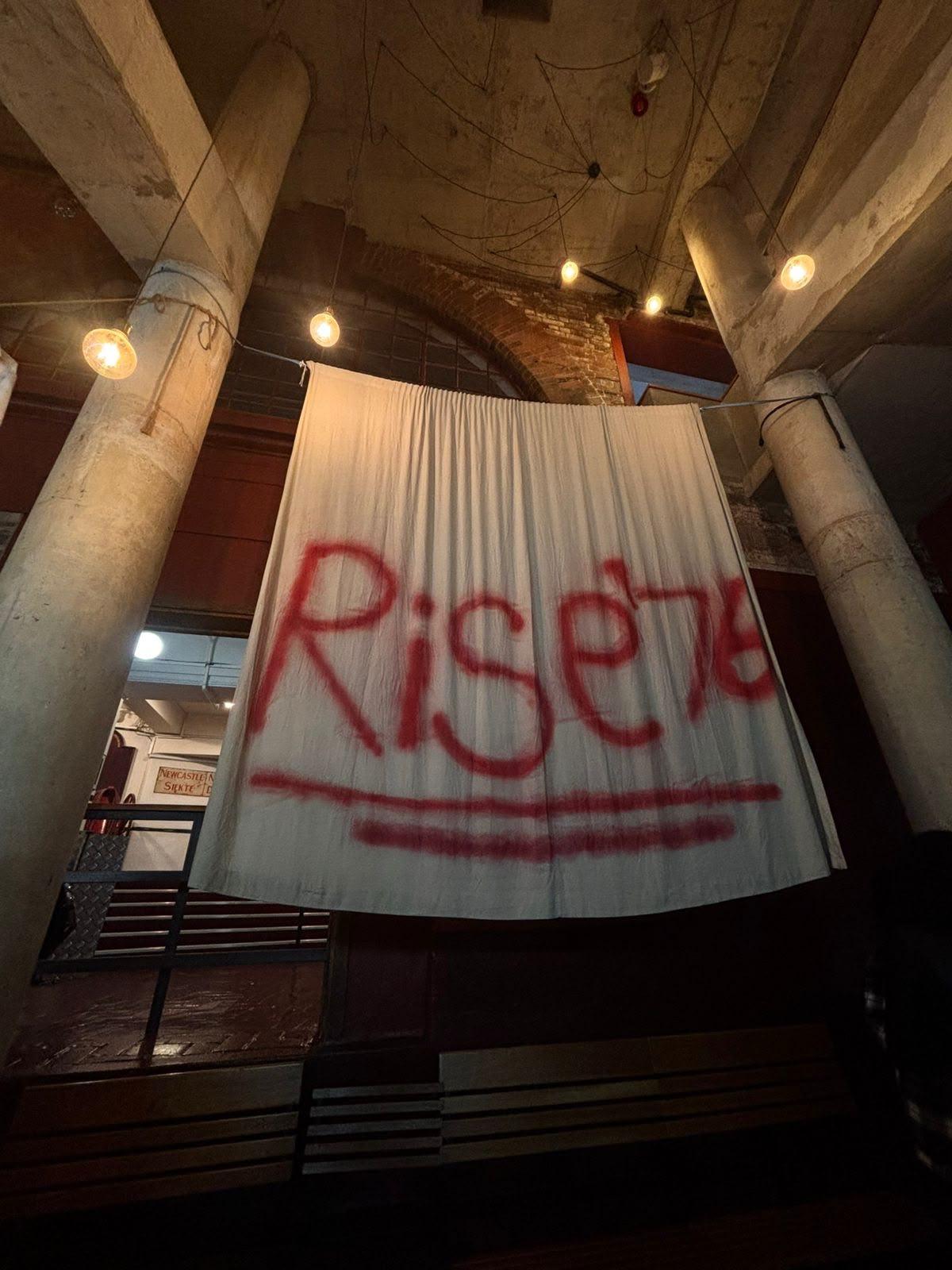
I had stepped off a plane in Addis Ababa with a friend I’d met on the flight. I was en route to Senegal for the Festival Djaram’Art, which opened on 16 June 2026. I thought about the layover time and how I would miss RISE 76: The Story of June 16th, a play by Tiisetso Mashifane wa Noni commemorating the 50th anniversary of the Soweto uprising and more. I had read that memory played an important part in how her story was crafted, and the possibility of multiple voices emerging from it excited me – but sadly, I would miss the play. My friend suggested we grab something to eat before going our separate ways.
At a restaurant, we met Abraham. He was our waiter, but by the time the meal ended, he had become something closer to a teacher. I am still not sure how to fully articulate this, even after sharing it with my colleague Louis Valente, whom I was going to meet in Senegal.
“Are you Ethiopian?” was Abraham’s question.
I replied gently: “I am African. I am a citizen of the world.” I told him I resist the boxes that slice our continent and the world into competing nationalities; that in Africa, fifty-four flags, drawn largely by colonial cartographers, should not divide a people who share so much beneath the surface.
“Are you Ethiopian?” he asked again.
“I am African,” I replied.
“You look like one of us,” he continued.
“I am African.”
He listened, but he was unmoved. He studied my face the way one studies a photograph, trying to place a memory.
“You are Ethiopian,” he said. Not a question. A conclusion. “You look like my mother.”
So I said, “What shall Mom have, son?”
He suggested Tibs, Shiro, and Injera to scoop with our hands – no cutlery, no ceremony, just the oldest human gesture of breaking bread together. In Senegal, Louis and I encountered a similar breaking of bread, served in one container to eat together, with hands or a spoon.
It struck me only later that Abraham and I were not actually disagreeing. He saw queenship in my face; I felt kinship in my conviction. He was reading my body the way I read history -both of us reaching for the same truth of belonging, through different vocabularies. His was intimate, maternal, immediate. Mine was political, continental, abstract. But underneath both was the same instinct: botho – ubuntu – humanity. I am, because you are.
Abraham. There is something fitting in his name. Abraham, father of multitudes, claimed by Jews, Christians, and Muslims alike – a man whose story refuses to stay contained within a single faith or people. Abraham, our waiter, unknowingly carried that same refusal to be contained. He did not care about my theories of challenging separatism; he cared about recognition – about seeing his mother’s face in a stranger from somewhere else on the continent he called home.
I carried that meal memory with me into every conversation that followed. Starting with Louis and the festival delegates, I reminded them that ASSITEJ unites us across political borders – that the word “ASSITEJ” placed before each country’s name marks our distinct identities – because theatre, like that table in Addis Ababa, the land of origin, does not ask for passports. A child watching a puppet grieve, or laugh, or fall in love with a story does not pause to check whether the actor is Senegalese, South African, Danish, or of any other nationality. The recognition is instant and wordless – the same recognition Abraham felt seeing his mother in me, before either of us had spoken a word of explanation.
This is why organisations like ASSITEJ – the International Association of Theatre for Children and Young People, matter so urgently in a world straining under the weight of borders, both physical and ideological. ASSITEJ exists precisely in that space between Abraham’s instinct and ours in the creative sector: the belief that theatre is a birthright, not a privilege bound by geography. It does this while championing the rights enshrined in the UN Convention on the Rights of the Child – the right of every child to participate in cultural life, to express themselves, to imagine.
In an era of resurgent nationalism, displacement, and division, theatre for young audiences becomes an act of quiet defiance: a stage where a child in Dakar and a child in Addis Ababa – or anywhere else – might, for the duration of a performance, recognise themselves in the same story.
Abraham never got his answer that day. But he was right about something larger than divisions. He saw, before I could articulate it, that the lines we draw matter less than the faces we recognise. In a strange turn of events, I did get to see RISE 76: The Story of June 16th after all. Let’s just say I am simmering with memories that may never leave me.