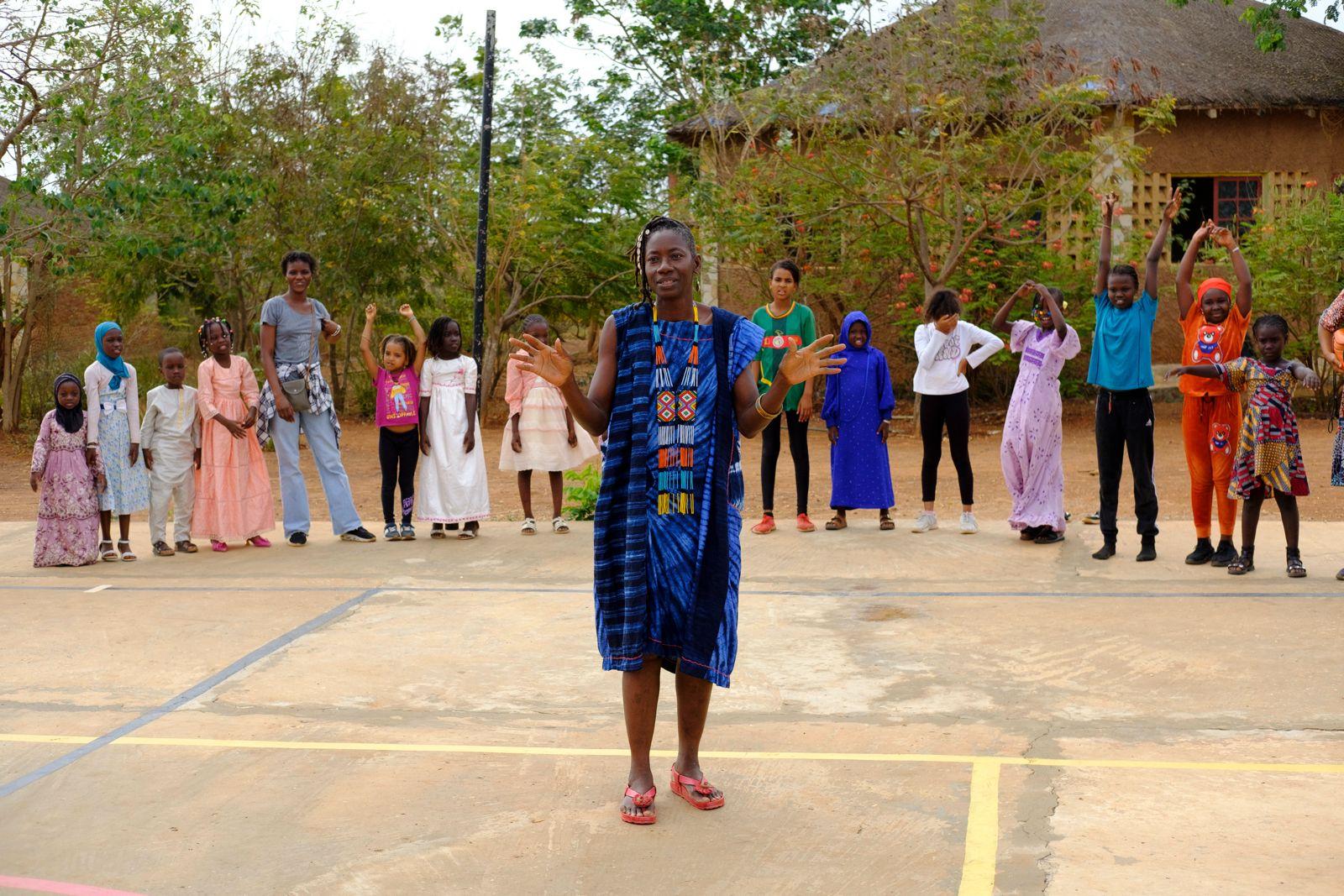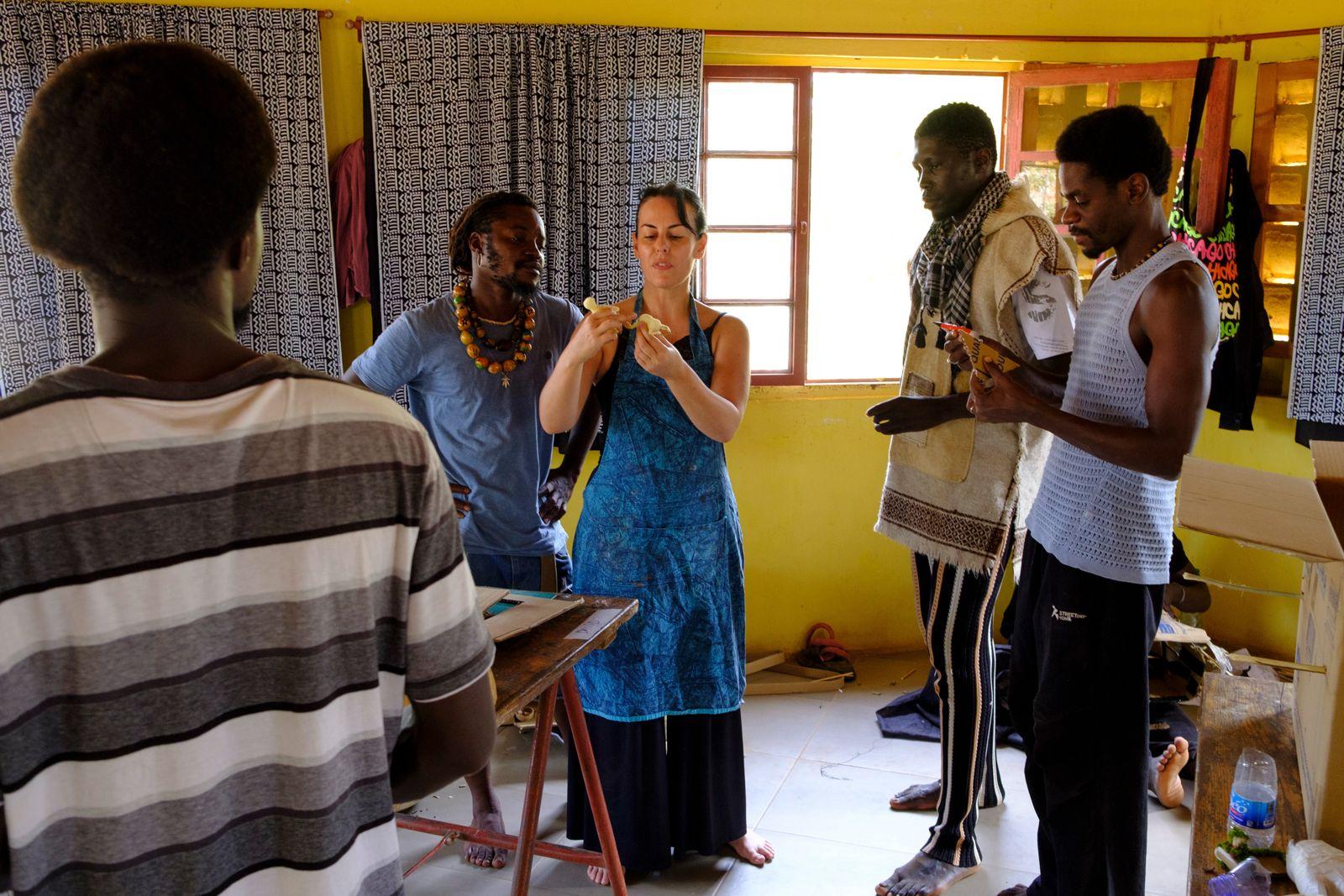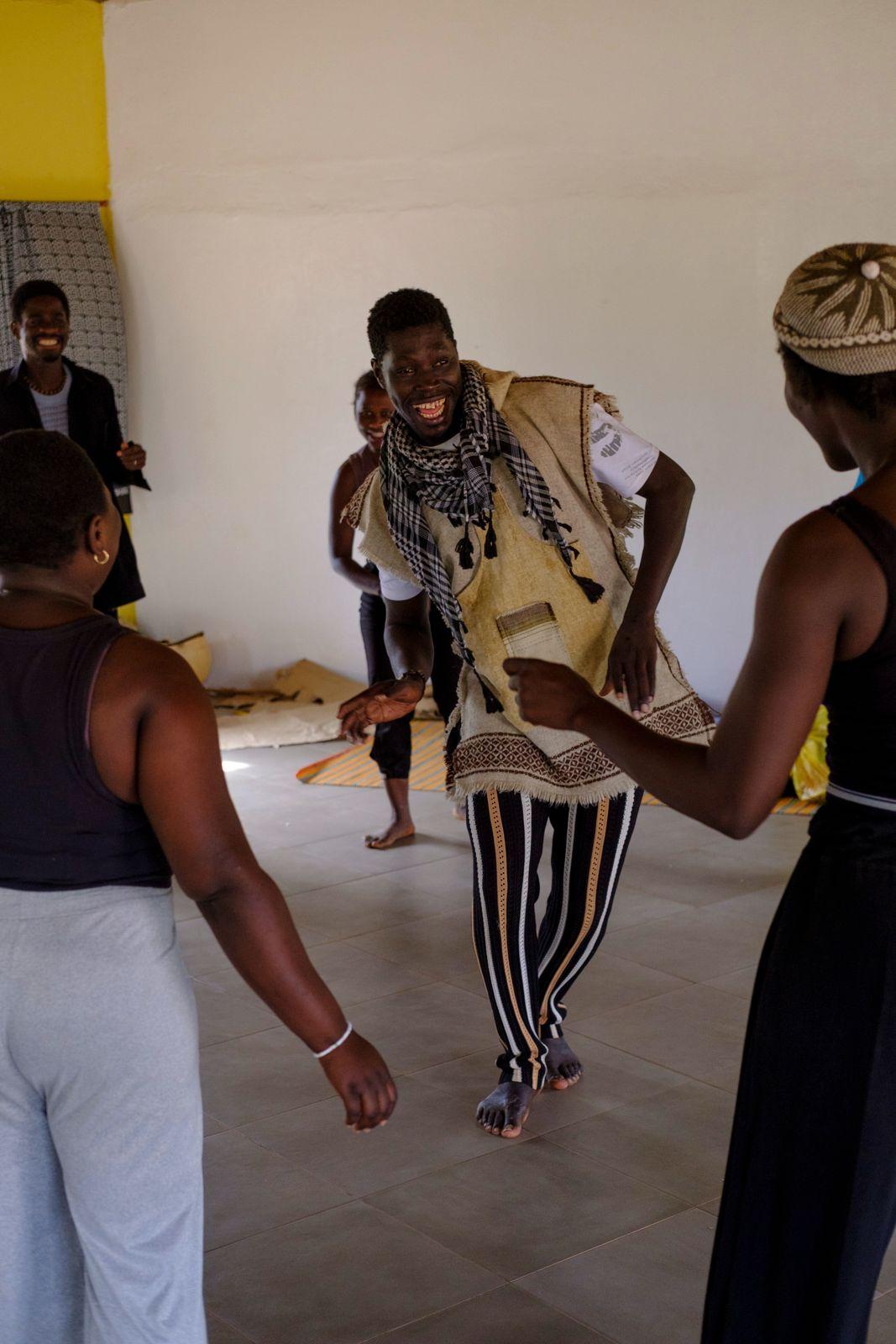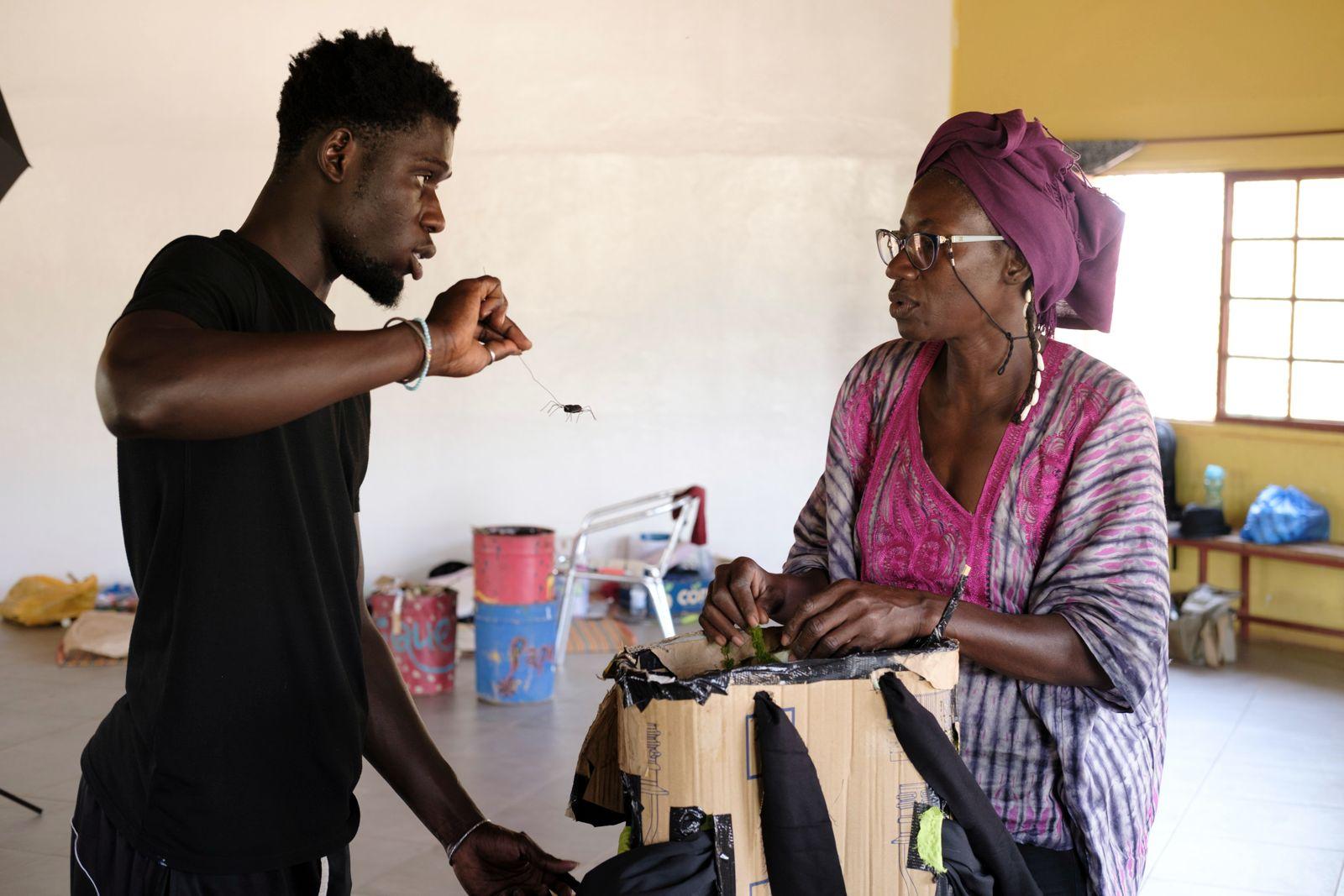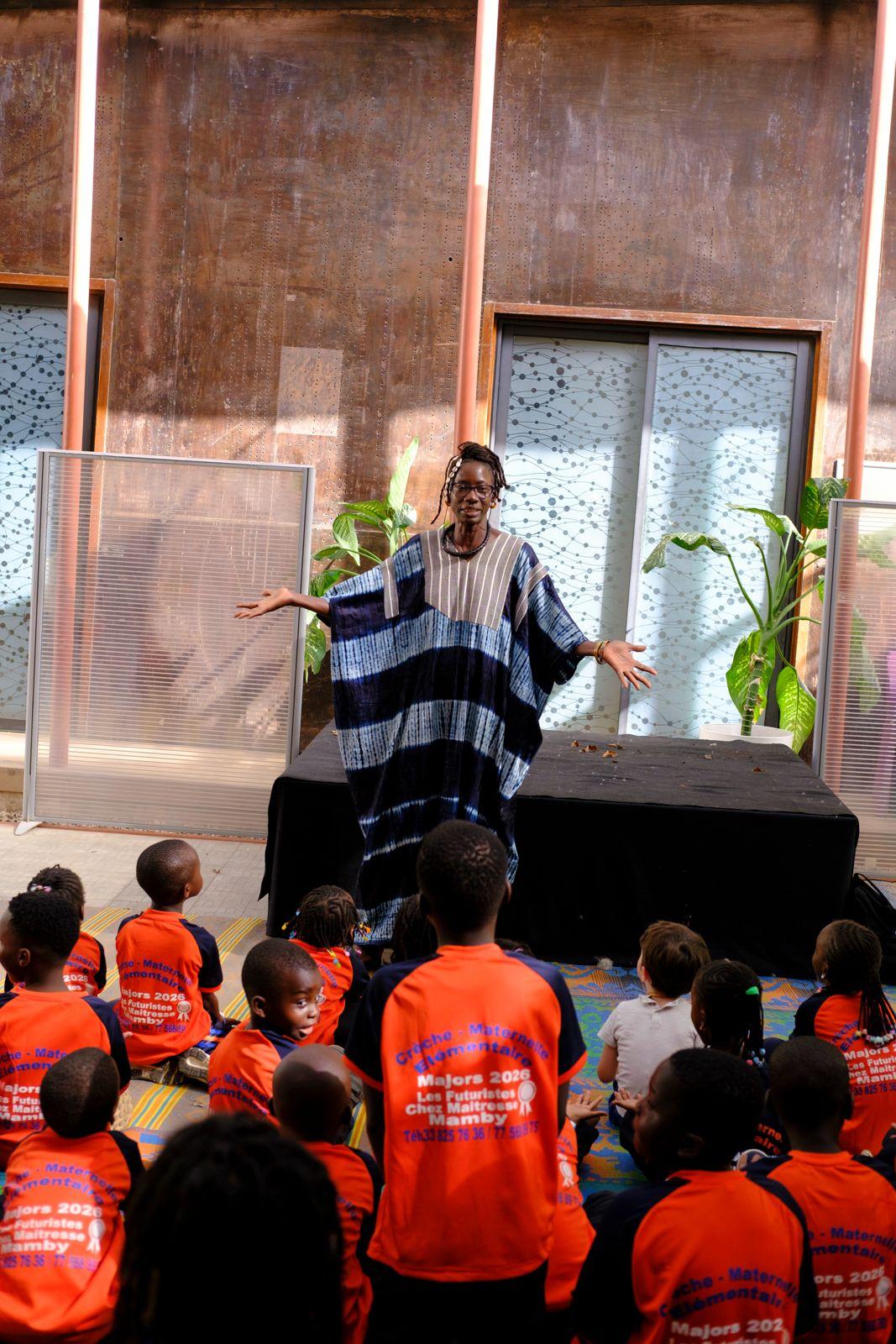
First Phase in Senegal
Hello everyone,
I am very happy to speak to you today about the Vogue Africaine project, because for us, this project is much more than a simple programme of activities or a creative project.
It is a project that has opened up a space for work, training, structuring and cooperation around theatre for young audiences in West Africa.
Before going into detail about what has been done in Senegal, I would like to begin with one important point.
In several of our ASSITEJ centres in West Africa, there were already artists, aspirations, ideas and very strong needs around creation for children and young people. But what was often missing were the concrete means to turn those aspirations into projects.
There were few or no financial resources, few working frameworks, few training opportunities, and in some cases ASSITEJ centres existed on paper but did not really have the possibility to develop any real momentum.
And this is where Vogue Africaine has been extremely important.
For me, this project has played the role of an incubator for new dynamics in theatre for young audiences in West Africa.
I say incubator for new dynamics because it is not only about supporting individual artists. It is also about helping centres get moving again, creating spaces for training, stimulating cooperation between countries, encouraging the emergence of new projects and, more broadly, giving greater visibility to theatre for young audiences in contexts where this sector is still far too little supported.
So when we talk about the challenges and objectives of Vogue Africaine, we are first of all talking about an issue of capacity building: how can we enable young artists, teams and centres to develop skills, projects and collaborations around theatre for young audiences?
We are also talking about an issue of structuring the sector, because the project does not only support an artistic creation: it also helps consolidate networks, reconnect artists with one another, revive ASSITEJ centres, and create links between artistic, institutional and educational dimensions.
And then there is another issue that seems fundamental to me: recognising theatre for young audiences as a full artistic field in its own right.
In many contexts, artistic creation for children and young people remains marginalised, even though it touches on essential issues: access to culture, arts education, the development of imagination, citizenship, transmission, and the place we give to childhood in our societies.
Finally, there is the issue of regional cooperation. Vogue Africaine creates a space in which artists, centre leaders and partners from several countries can meet, share experiences, confront their realities and think together about the future of theatre for young audiences in West Africa.
In Senegal, this project was particularly important because it came at a time when ASSITEJ Senegal needed to be revitalised.
The centre existed, of course, but it needed to be set in motion again, to reconnect with artists, and to regain a base, visibility and collective momentum.
Very concretely, we used Vogue Africaine to make this first phase of the project a lever for relaunching ASSITEJ Senegal.
The first step for us began in April.
We used the Vogue project as a starting point to launch a communication campaign. This campaign had a double objective: on the one hand, to make the project known; on the other hand, to use this momentum to make ASSITEJ Senegal better known, remind people of its role, and invite new companies to join us.
This stage was very important because it allowed us to reach a large number of artists who sometimes knew little about ASSITEJ, or had never had any connection with the centre.
And it had a very concrete impact: new companies joined, paid their membership fees, and we went from around ten to around twenty member companies.
For me, this is an essential point to highlight, because it shows that Vogue Africaine not only made it possible to launch an artistic project; it also made it possible to get ASSITEJ Senegal moving again, open it up more widely to artists and broaden its membership base.
Then, in May, we organised an online training session around Lambe Lambe.
We chose this artistic form because it lies at the heart of the Vogue Africaine creation in Senegal. It was therefore important, even before entering the residency phase, to create an initial space for discovery, transmission and awareness around this art form.
This training had several objectives: to introduce Lambe Lambe to artists who knew little or nothing about it, to share tools, to open up creative perspectives, and to begin building a community of people interested in this adventure.
Here again, the response was very encouraging: 60 people showed interest in the training, and 23 actually took part online.
Beyond the numbers, what this tells us is that in Senegal there is a real desire for training, discovery and experimentation around theatre for young audiences and contemporary forms of creation.
In the process, we launched a call for applications for the first phase of the project in Senegal, meaning a phase of research, training and creation within ASSITEJ Senegal.
The idea was not simply to recruit participants, but to bring together a group of young artists capable of engaging in a demanding work process, with clear criteria linked to the needs of the project.
At the end of this call, 10 young artists were selected.
And it was with this group that we organised, from 2 to 13 June, the first residency phase in Senegal.
This residency was a very important moment because it made it possible to lay the first concrete foundations of the project.
It was a time for research, training, experimentation and creation.
A time to discover a form, to test, to explore together, to confront different imaginaries, to work collectively and to begin building an artistic proposal.
And I think this is also where we see the strength of Vogue Africaine: it is not a project that arrives with an already finished result; it is a project that creates working conditions, gives time to research, supports artists, allows a team to come together and enables a collective adventure to take shape.
At that point, I will show the 2-minute video, because it gives a much better sense than words of the energy of this first residency, the commitment of the participants and the way the project began to take shape in Senegal.
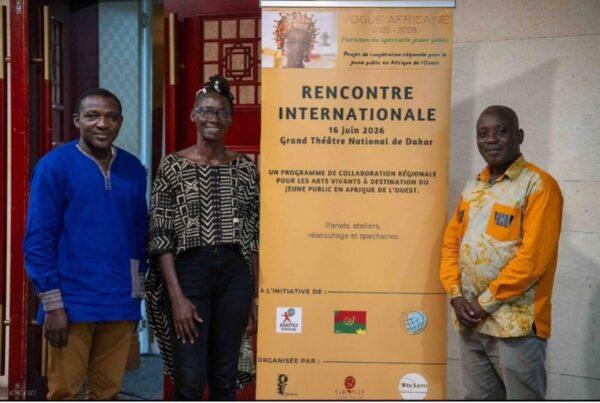
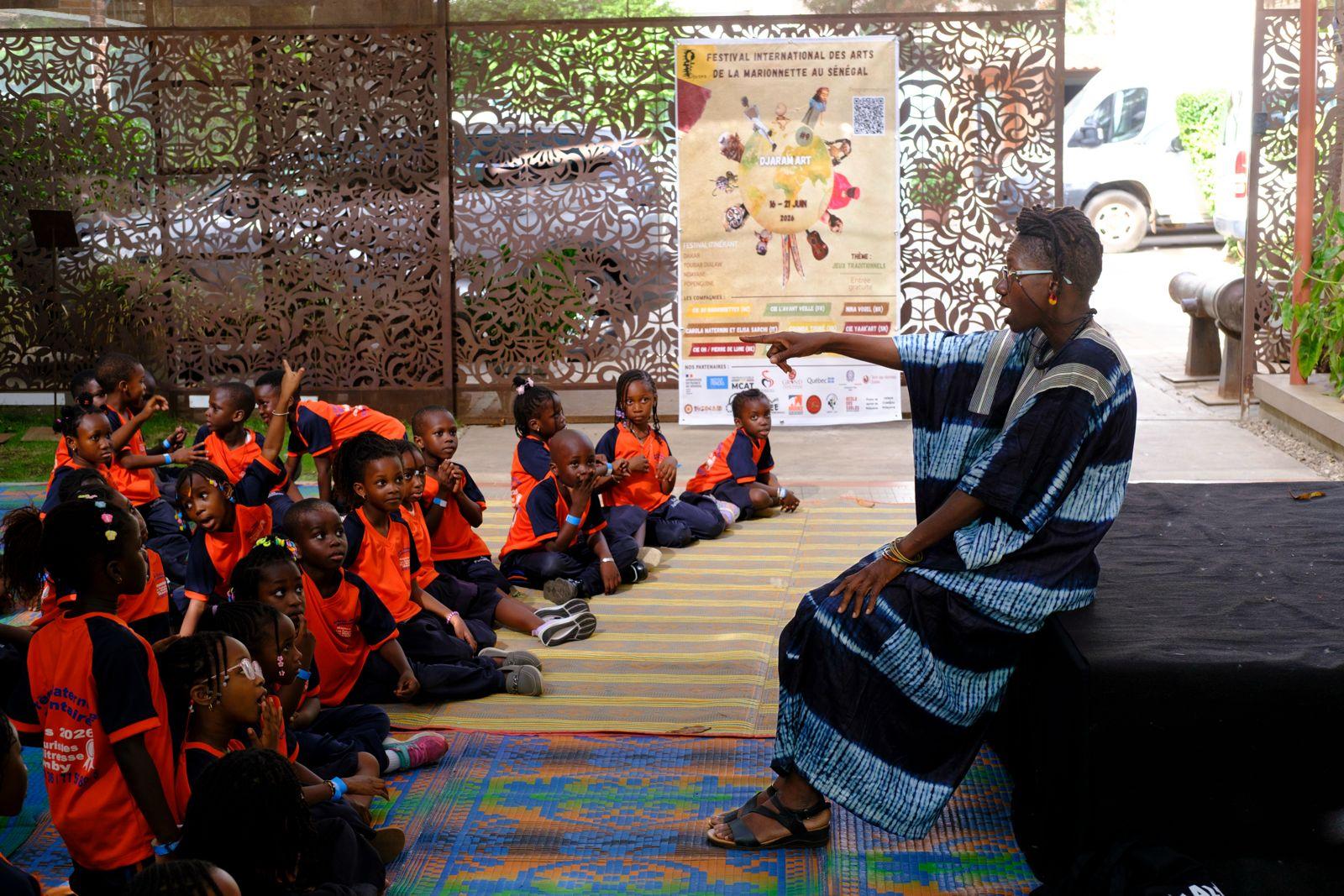
After this first residency phase, we continued the momentum with another very important moment: the international meeting on theatre for young audiences, organised on 16 June in Dakar.
This meeting took place both within the framework of Vogue Africaine and as part of the opening of the Djaram’Art Festival. It brought together project partners, representatives from several countries – notably Burkina Faso, Côte d’Ivoire, Mali and Guinea-Bissau – as well as artists, cultural actors and Senegalese institutions, including the Grand Théâtre National.
The aim was to create a space for dialogue, reflection and consultation around the major challenges facing theatre for young audiences: training, mobility, cooperation, advocacy, and the relationship between culture and education.
This meeting was important because it showed that Vogue Africaine is not only a creation project, but also a project that seeks to nourish a broader reflection on the development of theatre for young audiences in our region.
The discussions were organised around four major workshops.
The first focused on training in theatre for young audiences: how to train artists and professionals, how to transmit know-how, what educational tools to develop, and how to strengthen the capacities of cultural organisations.
The second workshop focused on regional and international networks for artistic cooperation: mobility of artists and works, co-productions, residencies, the structuring of networks, and South-South and inter-African cooperation.
The third workshop focused on advocacy for the development of theatre for young audiences: how to raise awareness among decision-makers, how to defend this sector more effectively, how to ensure recognition of the place of young audiences in cultural policies, and how to build arguments and advocacy tools.
And finally, the fourth workshop focused on the links between culture, society and education: arts and cultural education, inclusion, diversity, the role of the arts in child development, and cooperation between cultural and educational institutions.
For me, this meeting really showed that Vogue Africaine operates on several levels at once:
- at the level of artistic creation;
- at the level of training;
- at the level of structuring centres and networks;
- and at the level of political and strategic reflection on theatre for young audiences.
If I had to summarise what this first phase has made possible in Senegal, I would say several things.
First, it made it possible to relaunch a dynamic around ASSITEJ Senegal.
Secondly, it made it possible to raise awareness of ASSITEJ among a larger number of artists and to concretely increase the number of member companies.
It also made it possible to train, raise awareness and support young artists around a specific artistic form, Lambe Lambe.
It made it possible to bring together a group of 10 young artists engaged in a first phase of research and creation.
And finally, it made it possible to open a space for regional and international dialogue around the challenges of theatre for young audiences.
So, to conclude, I would say that Vogue Africaine is a strategic project, because it does not only produce a work of art: it also creates the conditions for theatre for young audiences to exist more strongly in our countries, in our networks, in our institutions and in our imaginaries.
It is a project that enables artists to train and create.
It is a project that enables ASSITEJ centres to structure and strengthen themselves.
It is a project that encourages cooperation between countries.
And it is a project that reminds us of one essential thing: children and young people have the right to ambitious and demanding artistic proposals, rooted in our realities and carried by supported artists.
In Senegal, this first phase showed us that starting from an artistic project, it is also possible to reactivate a centre, bring artists together, create collective momentum and place theatre for young audiences back at the heart of our priorities.
And I believe that this is the true strength of Vogue Africaine.
Thank you.
Mamby Mawine