Cleiton Echeveste
ASSITEJ Brazil Board Member
August 2026
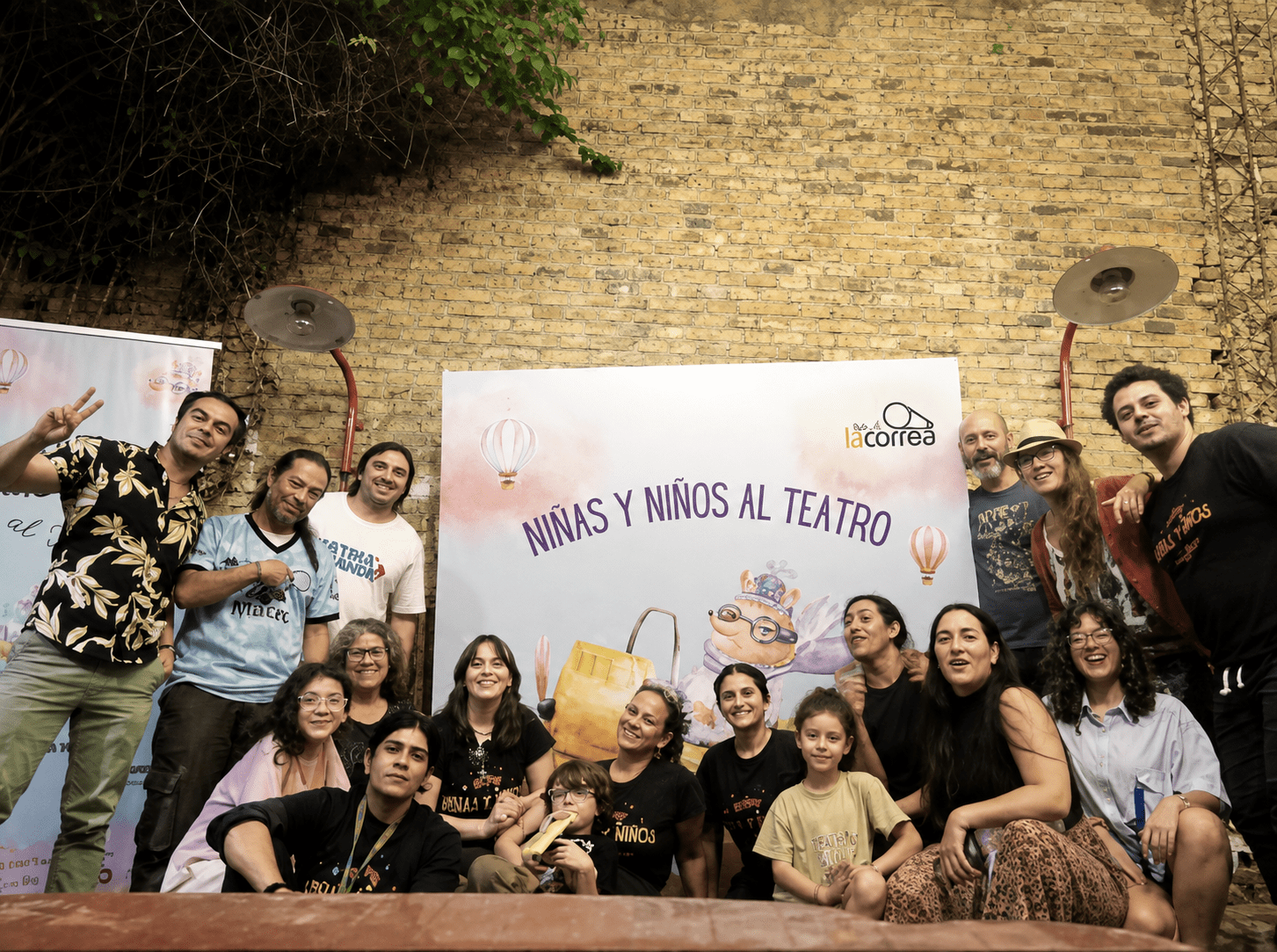
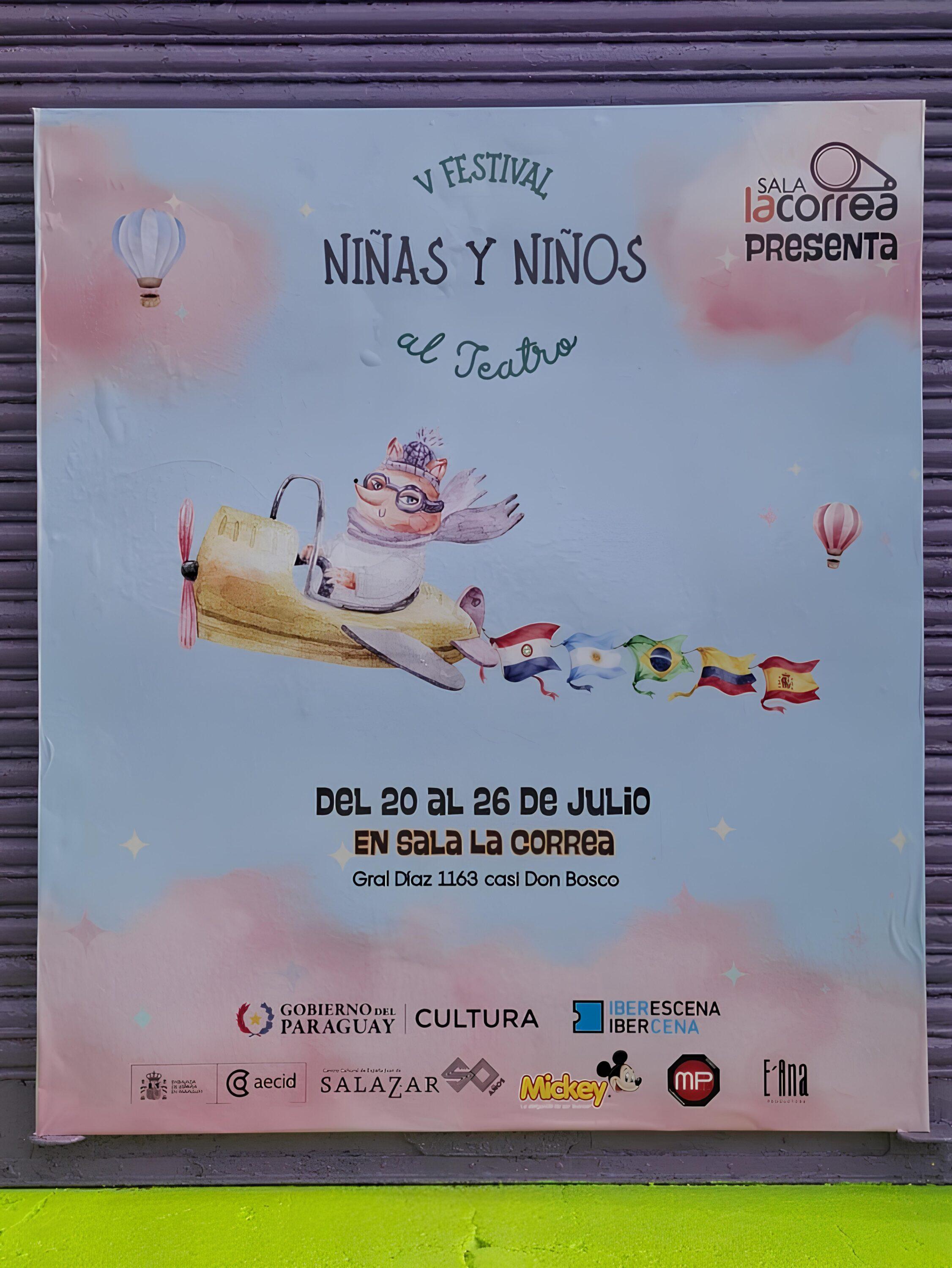 Between 20 and 26 July, I had the pleasure and privilege of taking part in the 5th Niñas y Niños Al Teatro Festival, held in Asunción, Paraguay. The two performance spaces at Sala La Correa, in the centre of the Paraguayan capital, as well as its spacious outdoor area, were transformed into a space for play, sharing, enchantment, discovery, provocation and inquiry. Theatre, music, dance, books, drawing and games were just some of the activities shared warmly and generously amongst people of various generations, who had travelled from Argentina, Brazil, Colombia and various parts of Paraguay itself. The Festival also hosted activities at the Spanish Cultural Centre in Asunción.
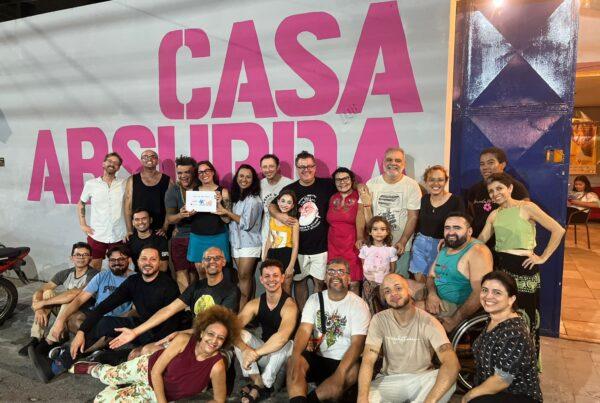
I am writing this account as a representative of ASSITEJ Brazil and a member of ASSITEJ’s Ibero-American Network for the Performing Arts for Children and Young People, and as an artist and researcher interested in regional dialogue, who has been working towards the establishment of a national ASSITEJ centre in Paraguay. In this regard, I was able to take part in the first meeting of the Paraguayan Children’s Theatre Collective, which brought together various artists, teachers and managers working in different cities across the country during the Festival. There, I was able to briefly present ASSITEJ’s vision and mission, and share our experience as the national ASSITEJ centre in Brazil over the past three decades. Alongside the Festival’s artistic programme, this meeting offered many of the participants their first face-to-face encounter and, above all, a space for what we hope will be the start of an associative movement involving theatre-makers for children from all regions of the country.
I cannot fail to highlight the commitment, collaborative spirit and enthusiasm of the team responsible for organising the event. These are perhaps what really set it apart – the sazón of this gathering, organised with immense care and professionalism, against a backdrop of a lack of public policies for culture on the part of Paraguay’s government bodies. That said, I do not intend to romanticise or gloss over either the difficulties or the scarcity. On the contrary, giving due recognition to all those who dedicate themselves to this endeavour reveals much about the character and resilience of a country subjected to centuries of exploitation by external and internal forces. This is evident in the strength and collective spirit of this event, organised against the odds in a country with little tradition in the performing arts for children and young people, at a particularly unfavourable historical moment for fostering citizenship among children and young people through culture and the arts.
It is worth asking ourselves: how many Paraguayan artists and groups do we encounter at the international events organised by our networks? How many proposals from Paraguay do we receive in response to our calls for entries, at our festivals, conferences, forums, seminars, colloquia and meetings? The answers may shed light on the extent to which we have come to accept this absence as the norm – certainly not because Paraguayan artists and groups wish to isolate themselves, but simply due to a lack of means and resources, partnerships and incentives, which would allow for greater engagement with the international scene and even a better framework for national circulation. In light of this, it is frustrating to realise just how much we are all missing out on. And it is, above all, Paraguayan children and young people who lose out, as they have restricted access to the richness and diversity of their own culture; what, then, can be said about their denied access to other cultures, even those of their neighbouring countries? By denying them access to works created specifically for them, we are denying them the right to build their own identity and to forge links with cultures to which they have so much to contribute and from which they have so much to learn. I am writing this text largely because our international ASSITEJ community has not yet established meaningful links with Paraguayan artists, groups and collectives. Even here in Brazil, we remain oblivious to what is happening on the left banks of the Paraguay and Paraná rivers. Having got that off my chest – which is actually a call to action – I’ll now touch briefly on what I was able to witness during the Festival.
It was an intense seven days, featuring eleven performances from three countries (Argentina, Colombia and Paraguay), all playing to full houses; three workshops; and a sector coordination meeting, as well as plenty of informal opportunities for conversation and exchange, over a mate or a tereré. In the field of production and management, I noted the existence of a few funding bodies for the cultural sector, such as the Itaú Paraguay Foundation, as well as support for programming from certain embassies through their cultural centres. A significant proportion of the initiatives in this area, such as certain festivals (the Niñas y Niños Al Teatro Festival itself, now in its fifth edition; the Añandu Unipersonales Festival, also in its fifth edition; the Encarnación International Theatre Festival, now in its thirteenth edition; and the new International Puppet Theatre Festival for Children, in Capiatá) and theatre productions, are organised through a network of support and partnerships with private companies, but primarily through the efforts of artists, managers and groups who run their own venues and forge collaborations amongst themselves to overcome the scarcity of resources. Against this backdrop, sponsorship from the Iberescena Programme has been crucial, enabling various internationalisation initiatives for two editions of Niñas y Niños Al Teatro, in 2025 and 2026.
The Festival’s programme reflected a diverse scene, closely linked to classic stories, dance and music. Whilst, on the one hand, the performances – particularly the Paraguayan ones – demonstrated an excellent ability to connect with the audience, on the other hand it is clear how much the scene could benefit from exploring other themes and stories, investigating other forms of expression and, undoubtedly, from having the time and material resources necessary for its development. The enthusiastic, vibrant and unanimous reaction of the audience – both children and adults – often spurred on by the performers themselves on stage, leaves no doubt as to the public’s interest in theatre and the performing arts. This is a theatre scene that would benefit greatly from more consistent, regular and sustainable exchanges with other artists and groups, both national and international; after all, to make theatre, one must watch theatre and discuss theatre – the more diverse, the better.
The 5th Niñas y Niños Al Teatro Festival provided, for the fifth year running, a space to celebrate connecting with children through theater and the performing arts. Even against a backdrop of budgetary constraints, the Festival offers a vision, a prospect of strengthening bonds, which allows us – drawing on the positive impact of this edition (as well as previous ones) – to focus on collaboration, listening, training, research and a healthy dose of boldness, placing even greater trust in children’s symbolic intelligence.
I wish our Paraguayan colleagues a long life and many new partnerships. I am immensely grateful for the warm and generous welcome from my friends Martín Pizzichini, Jazmin Mello, Joni Carmona, Ingrid Sotelo, Mike Couto, Cami Lambiase, Meche, and all my Paraguayan, Argentine and Colombian colleagues with whom I have had the pleasure of spending these past few days. A special thank you to the participants in my playwriting workshop: Fatima Estigarribia, Andy Colinas, Behil Martinez, Carlos Panta, Luisito Álvarez, Mariel Von Nowak and Séverine Moser. See you soon!