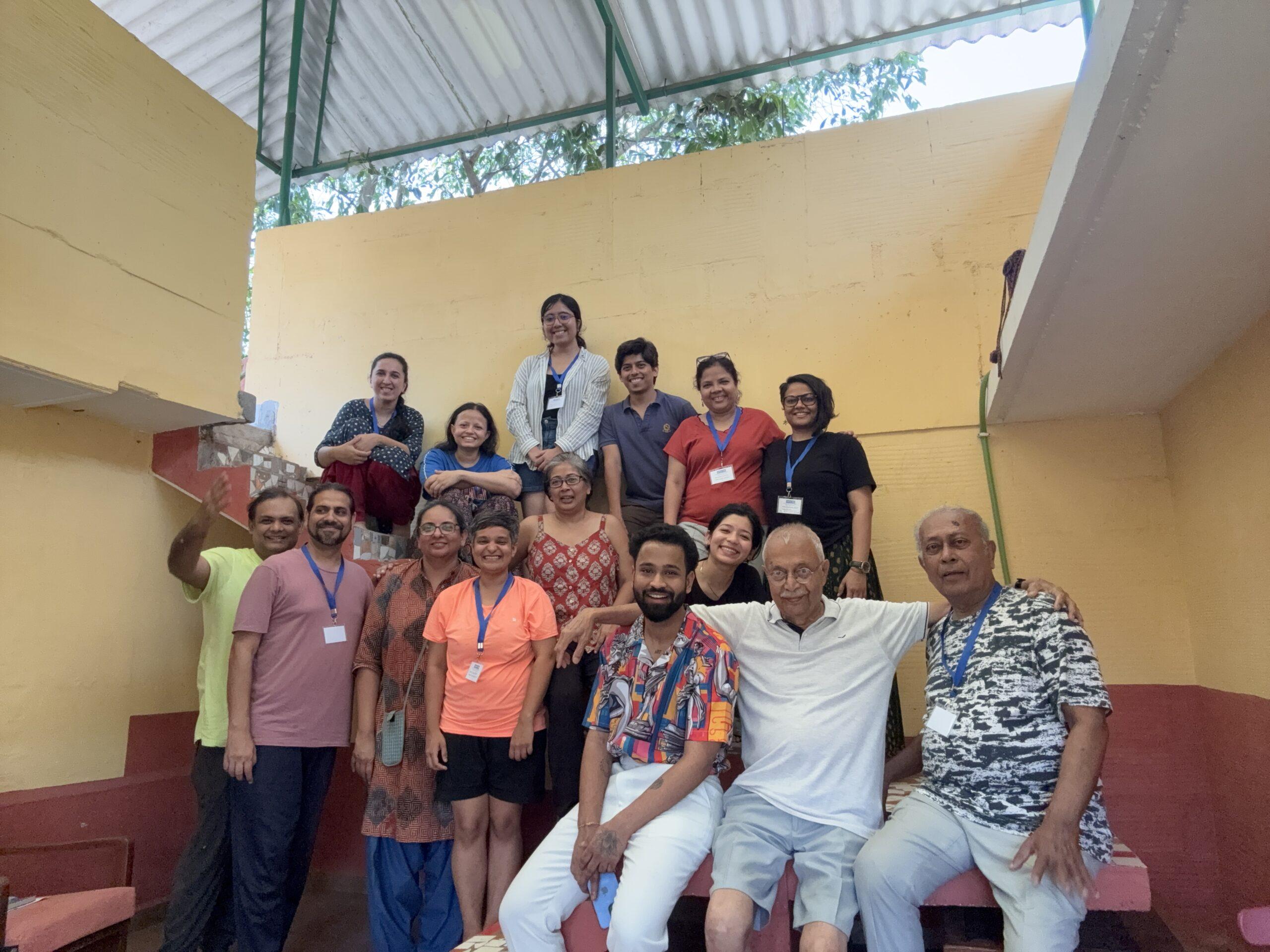
لأول مرة منذ عام 2018، اجتمع 15 عضوًا من ASSITEJ قادمين من نيودلهي ومومباي وبنغالورو وجايبور وسونالي وكولكاتا، في لقاء حضوري استمر ثلاثة أيام في أليباغ. وقد أُقيم الاجتماع في «ساتيام شيفام سوندارام هومستاي»، وهو مكان نابض بالحياة ومليء بالطبيعة، وشكل هذا اللقاء لحظة مهمة لإعادة التواصل بين أعضاء الشبكة بعد سنوات من التفاعل الذي كان يقتصر في الغالب على الإنترنت.
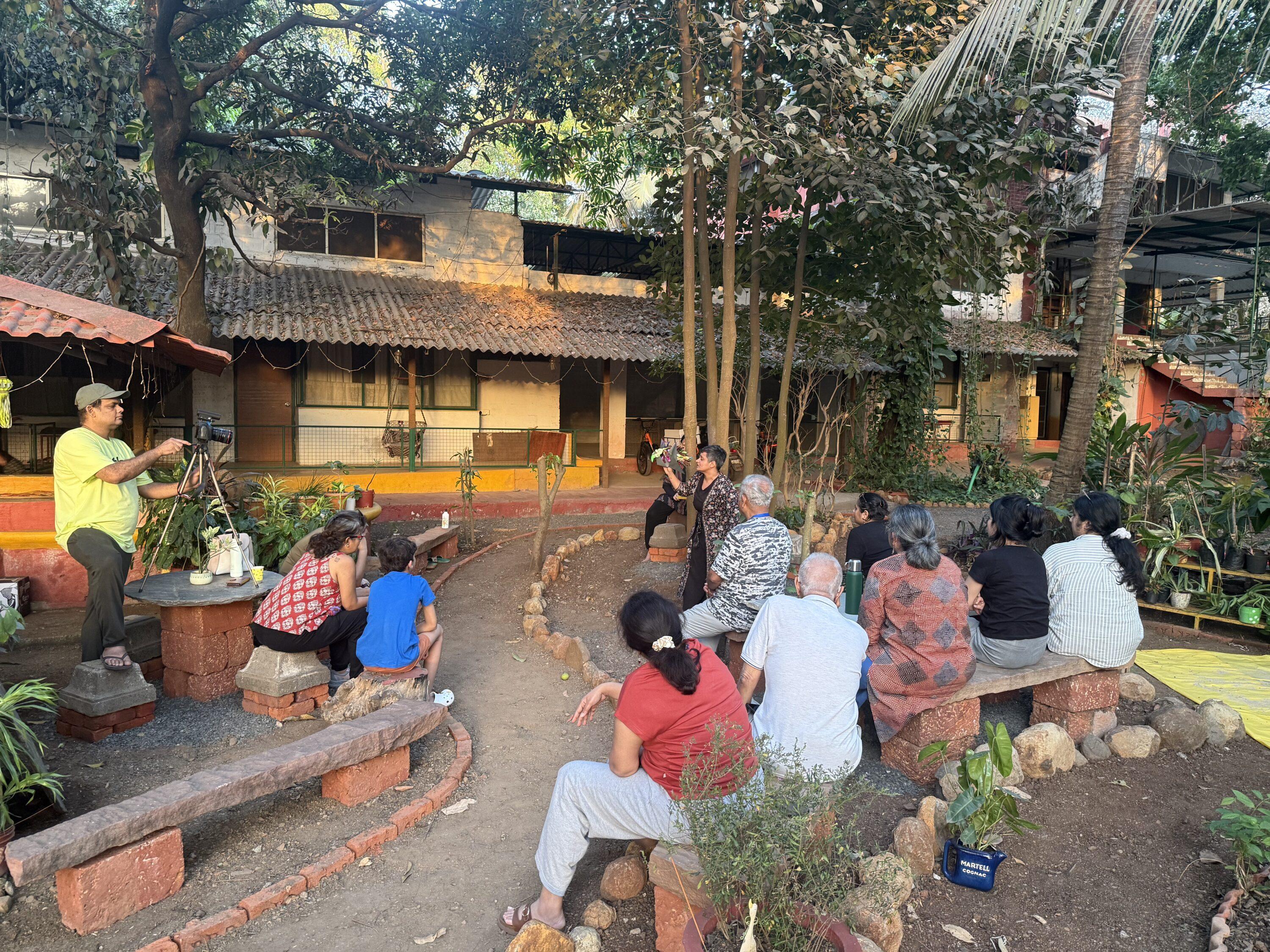
يقع المكان في بلدة أليباغ الساحلية، على بعد رحلة قصيرة بالعبّارة من مومباي، وقد أصبح المكان بحد ذاته جزءًا لا يتجزأ من هذا التجمع. تنقل المشاركون بسلاسة بين مجموعة من المساحات، بدءًا من حديقة مفتوحة ذات تصميم جميل وصولاً إلى غرفة المعيشة في الفيلا، والشرفة، والمسبح، والمزرعة العضوية – مما حوّل البيئة السكنية بأكملها إلى ساحة للتبادل والأداء والتأمل.
خلال فترة اللقاء، سادت أجواء تشاركية عميقة، حيث شعر كل من الأعضاء القدامى والجدد بالراحة في تبادل أفكارهم وممارساتهم وتطلعاتهم. وتضمنت الفعاليات ورش عمل وعروضاً فنية وجلسات لتبادل الأفكار، بالإضافة إلى فعالية على غرار «المواعدة السريعة» صُممت لتشجيع الحوار حول الأعمال الحالية والأحلام المستقبلية. وبدلاً من التركيز على نتائج أو قرارات محددة، ظل التركيز منصباً على فهم ممارسات بعضنا البعض وبناء علاقات أقوى داخل المجتمع.
وقد تجلى تنوع المناهج الفنية والتربوية داخل الشبكة بشكل خاص من خلال ورش العمل. فقد تناولت إحدى الجلسات التي أدارها الدكتور أشيش غوش موضوع الصوت والموسيقى، حيث أوضحت كيف يمكن للإيقاع والتكرار أن يجذبا انتباه الجمهور بشدة، مع إشراك فنانين لا يحملون تدريباً موسيقياً رسمياً في عملية سرد القصص.
في ورشة عمل أخرى اتسمت بالإيجاز والواقعية في آن واحد، شارك فيجاي بادكي أفكاره حول إدارة المنظمات غير الربحية في مجال الفنون. وتحدث عن التعقيدات التي تنطوي عليها عملية الحفاظ على هياكل تعاونية في مجالات تعتمد في المقام الأول على الشغف والالتزام الإبداعي، وعن أهمية إشراك خبراء خارجيين من مجالات غير إبداعية للمساعدة في الإدارة وتوسيع نطاق الرؤية.
أبرزت جلسة اللعب المفتوحة التي نظمها إمران خان الجانب القصصي لدى المشاركين من خلال اللعب التلقائي بالأشياء وتمارين بناء القصص. وتم تشجيع المشاركين على ترتيب الأشياء التي عثروا عليها بشكل حدسي وابتكار قصص مستوحاة من الأشكال والارتباطات التي ظهرت.
أصبحت الطبيعة نفسها مسرحًا وشريكًا في آن واحد خلال جولة حسية نظمتها كافيتا غوبتا ونيشنا ميهتا حول المزرعة العضوية التابعة لمنزل الضيافة. واختتمت الجلسة بجلسة تأمل جماعية بينما كان المشاركون يغمسون أقدامهم في المسبح. كما شاركت ميهتا رؤى حول مسيرتها الإبداعية مع «Nature Narratives»، حيث ناقشت كيف تُثري التجارب متعددة الحواس والملاحظة البيئية عروضها الفنية. وتعليقاً على التجربة، قالت: "شعرت أنني مشاركة أكثر من كوني ميسرة. وهذا استنتاج مهم لأن التواجد في الطبيعة يميل إلى إزالة التسلسل الهرمي ويشجع على التواجد المشترك".
كما عكست العروض التي قُدمت خلال هذا اللقاء هذا الارتباط بالبيئة الطبيعية المحيطة. فقد أُقيمت كلتا العروض في الهواء الطلق، في مساحة لم تُصمم أصلاً لتكون مسرحاً، ومع ذلك تمكن المؤدون من التكيف بسلاسة مع محيطهم. وتحدثت بارخا فاتناني، في معرض حديثها عن أدائها لمسرحية «حلم السرطان الناسل»، قائلةً: «إن أداء مسرحية "حلم السرطان الناسل" في بيئة محاطة بالطبيعة، مع إضاءة طبيعية تسلط الضوء عليّ، أضفى على العرض بأكمله طابعاً صادقاً للغاية وسريالياً في آن واحد».
كان من أهم الدروس المستفادة بالنسبة للعديد من المشاركين تجديد الوعي بالإمكانيات المتاحة ضمن ASSITEJ، بفضل التواجد عبر الإنترنت لأعضاء مجموعة العمل ASSITEJ للعضوية في ASSITEJ جوليا دينا هيس وستافروس ستافرو. واستكشفت المحادثات سبل التعاون عبر الممارسات المختلفة، والشراكات المستقبلية، والطرق التي يمكن للأعضاء من خلالها المشاركة بشكل أكثر استقلالية واتساقًا مع ASSITEJ . كما سلطت المناقشات الضوء على أهمية لامركزية ASSITEJ وتوسيع نطاق المشاركة إلى ما وراء هياكلها الحالية.
وحتى بين الأعضاء الذين كانوا على دراية مسبقة بأعمال بعضهم البعض، أثبتت جلسة «التعارف السريع» أنها كانت مفيدة بشكل غير متوقع. فقد تبادل المشاركون الأفكار حول مشاريعهم الحالية ومساراتهم الشخصية وتطلعاتهم المستقبلية، مما فتح آفاقاً جديدة على ممارساتهم الفنية والتنظيمية، وكذلك على ممارسات بعضهم البعض.
وقد خرج العديد من المشاركين من الاجتماع بشعور متجدد بالانتماء وبزخم جديد. وعلق فيجاي بادكي قائلاً: «رأيت في هذا التجمع منظمة قد تغيرت تماماً – شباب أكفاء، مفعمون بالطاقة، وذوو أفكار عديدة، يقومون بعمل ممتاز حقاً». ولاحظت براشي سينغ أنه على الرغم من أن إعادة التواصل مع الممارسين كان أمراً قيماً، «إلا أن الأهم من ذلك كان فهم عمق ونطاق العمل الذي لا يزال يتعين القيام به في هذا المجال، والبدء في وضع خارطة طريق له».
بالنسبة للكثيرين، جرت بعض أكثر الحوارات إثراءً خارج الجلسات الرسمية. وكما أشارت المشاركة دارشانا باتوا: «كان إمران قد قال في وقت مبكر إن أهم المحادثات تحدث خلال اللحظات غير الرسمية – أثناء الإفطار أو الغداء أو استراحات الشاي أو بعد العشاء. وبالفعل، كان ذلك هو المكان الذي جرت فيه بعض المبادرات القيمة لتبادل الأفكار». ووافقه الرأي ديفداس أوشالي قائلاً: «لقد أتاح ذلك إقامة روابط أعمق مما هو ممكن عادةً في الاجتماعات القصيرة أو الفعاليات الرسمية».
وبالإضافة إلى ورش العمل والمناقشات، شكّل هذا اللقاء مناسبة عاطفية مهمة لإعادة التجمع لشبكة لم تجتمع وجهًا لوجه منذ عام 2018. ورغم أن المنصات الإلكترونية ساعدت في الحفاظ على التواصل عبر المسافات الجغرافية، إلا أن هذه التجربة أكدت مجددًا على أهمية التواجد المباشر والمكان المشترك والطاقة الجماعية.
وقد «أطلق لقاء أليباغ عملية لإنشاء ASSITEJ كما أوضح الدكتور أشيش، وهي عملية ترتكز على التعاون والرعاية والتجريب والحوار المستمر. ولم يقتصر الأمر على مجرد اجتماع، بل أصبح عملية مشتركة لتصور الشكل الذي يمكن أن يتخذه مستقبل المنظمة معًا.
وكان من بين الحاضرين مزيج رائع من الأعضاء القدامى والجدد، من بينهم فنانين ومنتجين ومربين ورواة قصص:
- أشيش غوش، أنانت، نيودلهي
- إميران خان، آي-إنترتينمنت، نيودلهي
- ريا بانوار، i-Entertainment، نيودلهي
- نيشنا ميهتا، «روايات الطبيعة»، مومباي
- شايلي ساتيو، مسرح جيلو ريبرتوري، مومباي
- بارخا فاتناني، مسرح جيلو ريبرتوري، مومباي
- تشويتي غوش، مؤسسة ترام للفنون، نيودلهي ومومباي
- أبيسار بوس، مؤسسة ترام آرتس، نيودلهي ومومباي
- فيجاي بادكي، مسرح بنغالور الصغير، بنغالور
- كريتش، منظمة «من الفعل إلى العمل»، جايبور
- براشي سينغ، ThinkArts، كولكاتا
- نيناد أوشالي، غوشتارانغ، سونالي
- ميتالي تاتي، غوشتارانغ، سونالي
- كافيتا غوبتا، ورشات ميرور، كولكاتا
- دارشانا باتوا، مدرسة «ذا جيتواي» في الهند، مومباي